
IEC Code
Import Export Code registration — the licence that permits us to export from India.
View certificate

Who We Are
Jay Jagannath Marine Eximss is a merchant exporter based in Cuttack, Odisha. We export classified fly ash and zinc ash to international buyers, and trade minerals, ore, marine products, fruits and vegetables within India.
About the Company
Jay Jagannath Marine Eximss (JJME) was founded in 2017. The company deals in minerals, ore, fly ash, zinc ash, marine products, fruits and vegetables in the domestic market, and exports fly ash and zinc ash to international markets.
Every grade is separated at source and classified before dispatch, and samples and test certificates are available prior to contract.

The Founder
Founder and Chief Executive of Jay Jagannath Marine Eximss. A young technologist from a business family, he spent more than a decade running the family businesses across mining, crushing, transport and fuel retail.
In 2017 he decided to start an export business of his own, and founded Jay Jagannath Marine Eximss. Under him JJME deals in minerals, ore, fly ash, zinc ash, marine products, fruits and vegetables in the domestic market, and exports fly ash and zinc ash in the international market.
A decade inside mining, crushing, transport and fuel retail is a decade spent moving bulk material to a deadline. That is the same problem an ash buyer has, seen from the other end.
Abinash Rout — Founder & CEOAt a Glance
Two Books
Fly ash and zinc ash go overseas. The domestic book is broader, and runs on the same sourcing and haulage the export side is built on.
Accredited
Registered with, and a member of, the bodies an export buyer checks first. Select any registration to view it full size.

Fly Ash · HSN 26219000 · IEC · FIEO · WTC Mumbai · MSME Udyam · GST
What We Are For
To redefine global trade through excellence, innovation and sustainability — connecting the world with seamless and ethical international transactions.
A future where international trade is a harmonious blend of innovation, ethical practice and global connectivity.
Process & Compliance
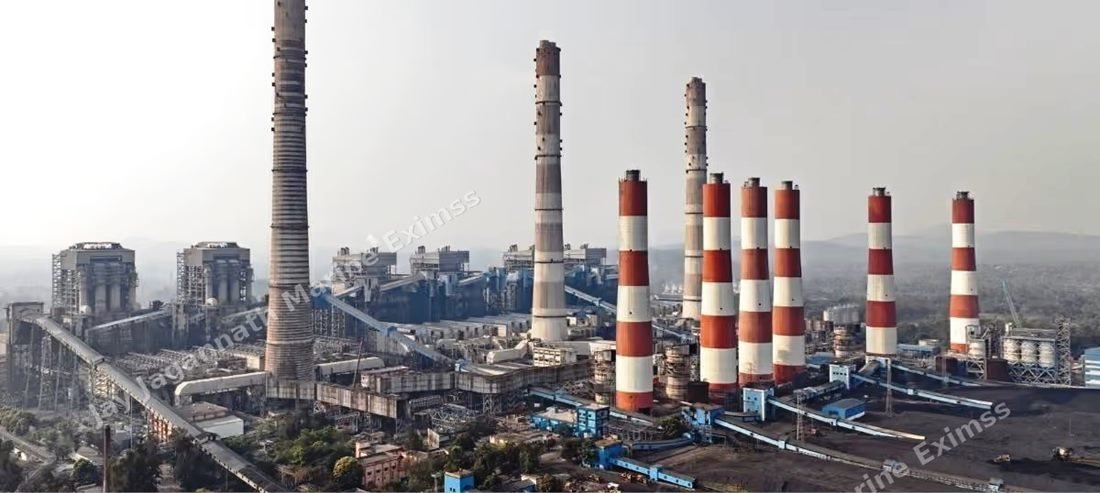
Raw ash is inconsistent. Classification separates the fine fraction, so what leaves our yard is a graded product with a test certificate against it — not whatever the boiler produced that week.
Why It Matters
The properties of fly ash vary widely, both physically and chemically, with the coal burned and the efficiency of combustion. Two loads from the same station in the same month can behave differently in a mix.
By classifying and processing, we ensure an optimum proportion of our fly ash is composed of fine particles — which is what makes the material controlled and consistent rather than merely available.
Fineness is the single property that governs how fly ash performs. Finer particles react faster, pack better and give the strength development that concrete specifications are written around.
Why the 45 μm sieve is the control pointThe Numbers That Decide
Fineness is measured as the percentage of material left behind on a 45 micron sieve after wet sieving. The lower the residue, the finer the ash.
Our ash is supplied to category S, the finer of the two EN grades.
Bench to Bag
Dry ash is drawn from the electrostatic precipitator hoppers of the thermal station, kept separate from bottom ash and pond ash from the outset.
The ash passes through a classifier that separates it by particle size, splitting off the coarse fraction and leaving the fines that carry the pozzolanic reactivity.
Samples are wet sieved on the 45 μm sieve to establish residue, with specific surface confirmed by the Blaine air permeability method — minimum 320 m²/kg under IS 3812.
A test certificate is issued against ASTM C618, BS EN 450 S or IS 3812 for the lot, and only then is the consignment packed and released for despatch.
Side by Side
The three codes our fly ash is graded against, and the limits each one sets.
| Requirement | BS EN 450-1Category S | ASTM C618Class F | IS 3812 Part 1Siliceous |
|---|---|---|---|
| Residue on 45 μm sieve | 12% max | 34% max | 34% max |
| Specific surface (Blaine) | Not specified | Not specified | 320 m²/kg min |
| SiO₂ + Al₂O₃ + Fe₂O₃ | Reactive SiO₂ governed separately | 70% min | 70% min |
| Loss on ignition | 5.0% max (category A) | 6.0% max | 5.0% max |
| Sulphur trioxide (SO₃) | 3.0% max | 5.0% max | 3.0% max |
| Total chlorides | 0.10% max | Not specified | 0.05% max |
Swipe the table across to compare all three codes →
Figures are the published limits of each standard, given for orientation only. The governing document is the test certificate issued against your consignment.
Tell us the code and category your specification calls for. We confirm what we can meet, and send a sample with its test certificate before contract.